- Feb 1, 2024
Is Apollo.io Worth it for Commercial & Industrial Sales? Features, Pricing, And Review (2024)
- Joe Guevara
- Software & Tools for Field Services
Selling to other businesses in the right way can be incredibly fun, but finding the right contacts for any business is one of the earliest and toughest milestones - but that’s where sales intelligence and lead database tools come in.
Having seen a ton of different sales data platforms, workflows, and systems across over a decade of B2B sales experience, this post will guide you through the tool I personally use today called Apollo.io that can supercharge your B2B sales - IF you’re the right type of business, and alternatives if you don’t fit their profile. Let's dive in!
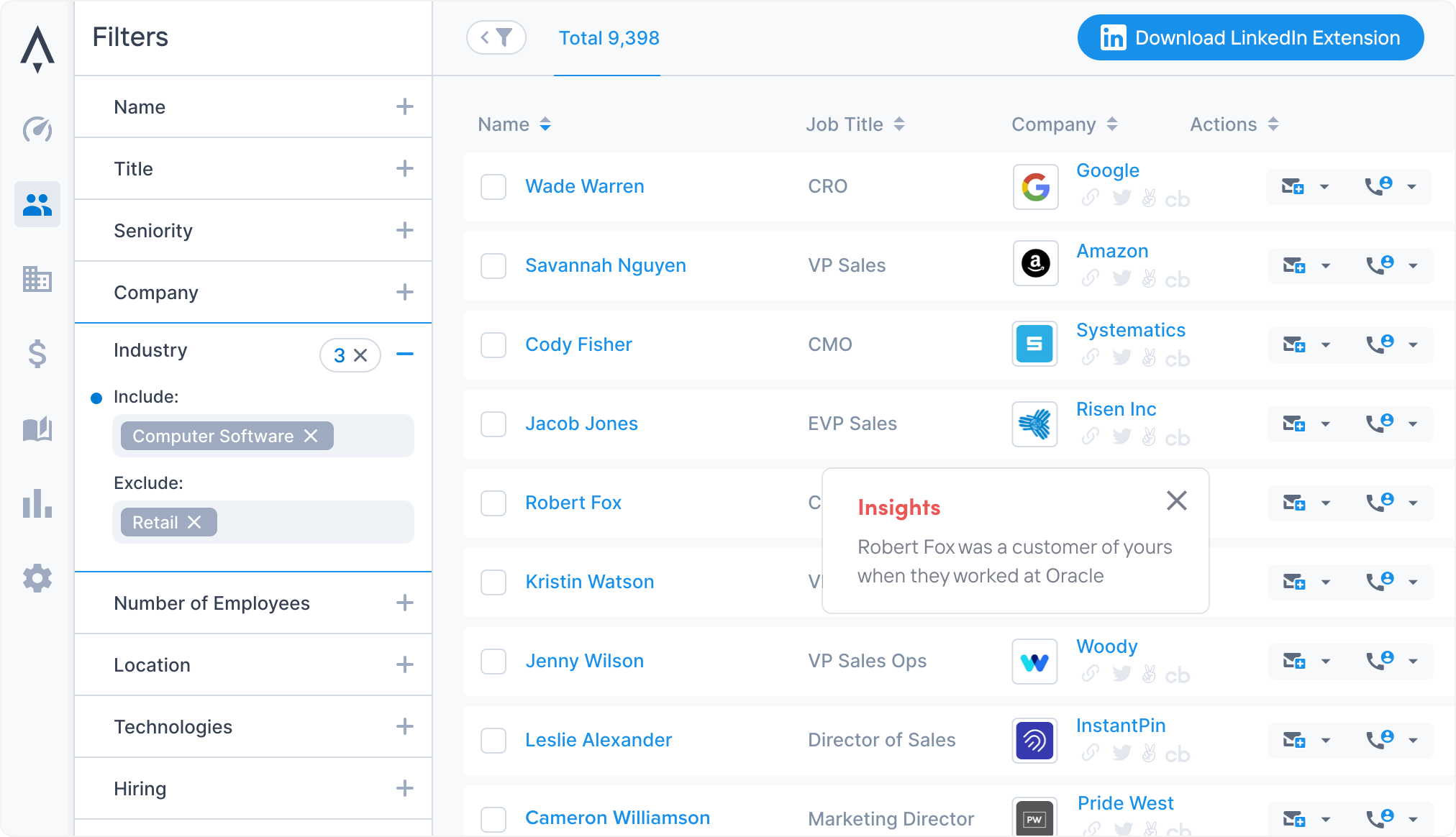
What are Sales Intelligence & Lead Database Tools?
A lead database or sales intelligence tool is a powerful asset for businesses engaged in B2B sales, providing a repository of crucial information about potential customers. These tools systematically gather, organize, and update a vast array of data, including contact details, company information, and relevant insights.
Some go beyond mere contact lists, offering advanced features such as prospecting, lead scoring, and buyer intent analysis. By leveraging these tools, businesses can identify promising leads, streamline outreach efforts, and enhance their overall sales strategy.
Apollo is one of a few software out there, the other 2 I’ll be reviewing on my YouTube channel will be ZoomInfo & Seamless. If you want a deep-dive review - definitely check out that video below.
www.youtube.com/@RehashDigital
What makes Apollo.io different?
Like all database software, Apollo.io hosts a database of contacts but it does have some unique features worth highlighting that you can test out yourself since you can try out their platform absolutely free here.
Apollo.io Features
The Apollo Database
As of writing this post & recording my video review - they boast 275 million leads that you can download contact information from - which at last count is the most out of the platforms I’ve tested. There are actually whole businesses on Upwork that simply regurgitate Apollo leads and charge $50 a pop for them!
Apollo Filters
One important factor in any lead database tool is the filtering capability to get the right contacts out of that list of 275 million. With Apollo, you can find the right people pretty easily with filters that rival more expensive competitors like ZoomInfo.
They’re even adding and improving new features called Buyer Intent to help you find markets looking for what you offer which ZoomInfo and specialist companies like 6Sense already had, but now you can have it all in a single tool.
Apollo Prospecting & Workflows
What really sets Apollo apart and makes it useful for me as a Small Business just as I imagine it would be for 80% of small businesses out there is their integrated prospecting & workflow tools. This includes steps or touches on Emails, Calls, and even LinkedIn.
When I managed larger teams, it’s almost essential to have specialized and custom tools and CRMs like Hubspot in order to get a big and complex sales & marketing process adequately automated and managed across different people.
But for smaller teams, the value of having a fully integrated solution becomes incredibly valuable. However, it’s not a one-stop shop. If you do any marketing or advertising - or plan to get a lot of inbound leads coming from digital channels - you’re going to miss a lot of automation with Apollo. So for me I still use Hubspot as a core CRM and marketing Tool and Apollo as a direct sales and prospecting.
For my particular workflow, that’s what I’ve found most efficient but every business & process is different. If you want help creating or improving your own sales tech stack and processes, I offer a free 30-minute discovery call to see if I can help with your situation; and you can look at the services I offer here.
Apollo Insights
Of course, with any sales and marketing process - analytics is hugely important. What doesn’t get measured doesn’t get managed, and what doesn’t get managed, usually doesn’t work long-term.
From click tracking, open rates, and engagement scores - it has the basic functionalities that you would expect again from bigger solutions like Hubspot or even specialized solutions like Salesloft. Yes, it’s not as comprehensive but for 80% of B2B small businesses - it’s more than enough.
Apollo.io Integration and Compatibility
Apollo plays well with others. This becomes incredibly important if you use other tools in your B2B tech stack including a CRM, obviously your email tool (Gmail or Outlook), and even other sales automation tools like Reply. They’re pretty well integrated for the most part with basic SMB platforms, but definitely not as much or as comprehensively as a tool like ZoomInfo or even Seamless.
One particular note is that their Outlook integration is far less featured than their Gmail integration so if you’re embedded in Outlook processes - you can still use it, but you won’t enjoy the ease of use a Gmail or G Suite user might have.
A second criteria to consider when it comes to integration is contact enrichment & validation. If you’re managing a small list of accounts, integrations won’t matter. But if you regularly intake event lead lists, partner lead lists, or the worst - anonymized lead lists from events that you need to scrub, enrich, and validate - having a good integration with your CRM is essential otherwise you’ll be spending HOURS poring over Excel sheets otherwise.
Check out their integrations on their website.
Apollo.io Pricing Tiers - Basic Overview
Choosing the Right Apollo Price Tier
Your best bet to figure out which tier you need is to just sign up for the free one here. As you start using the platform, you’ll see the specific features that are “gated” and don’t worry - Apollo will definitely make it easy for you to upgrade when you feel you need to test-drive those new features.
But overall, Apollo is the most cost-effective and low-risk option since you gradually scale up your cost based on exactly what you need without having to sign up for contracts (although annual payment plans do exist).
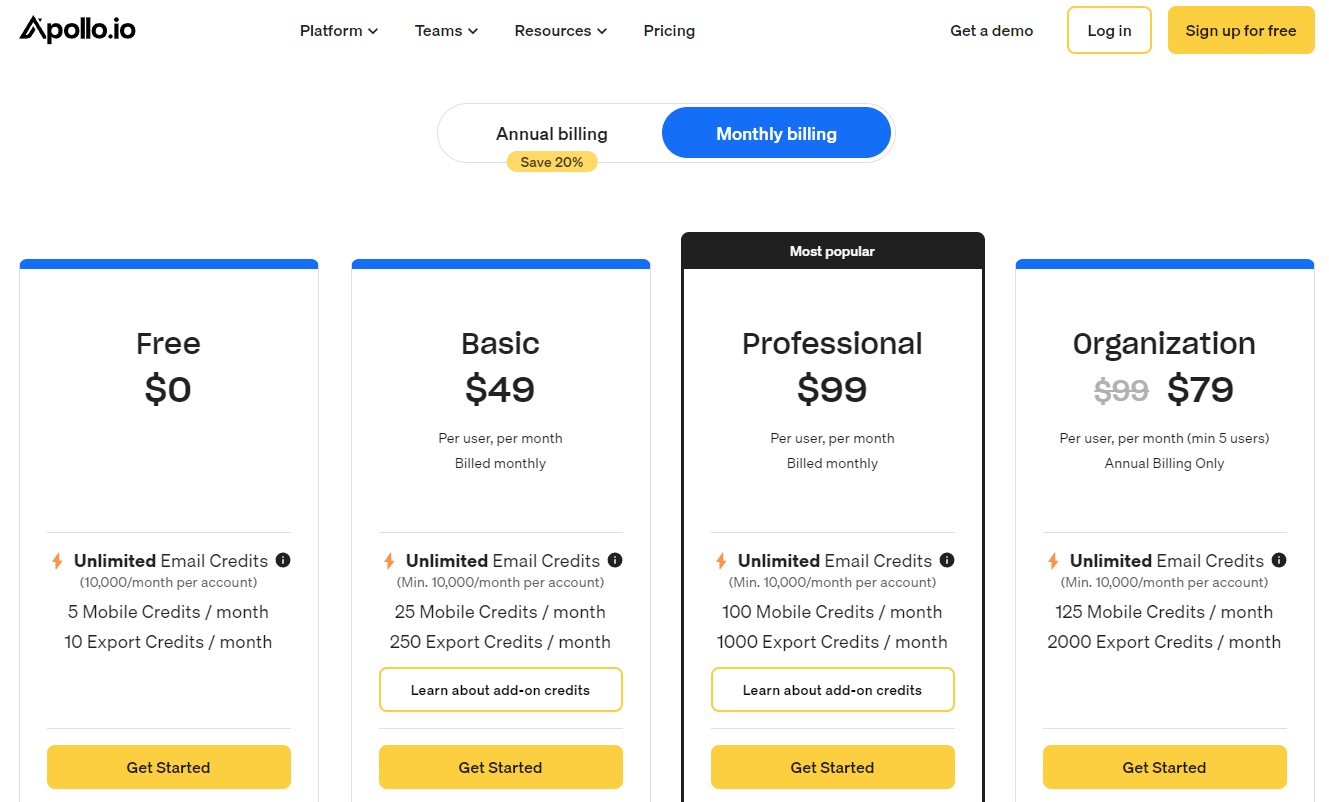
1. Free: Perfect for newbies! It gives you basic access to Apollo.io with some limitations. It's a great way to get to know the tool without spending money.
2. Basic: A bit more advanced, this plan gives you extra credits and better filters. It's like upgrading your toolkit with A/B testing and more access to the database.
3. Professional: Take it up a notch with features like a dialer service and call recordings. This plan lets you analyze your campaigns and see what works best.
4. Organization: For big teams, this plan has it all – call transcriptions, local presence numbers, and more. It's like a powerful toolbox for businesses with a lot of outreach.
Joe’s Take & Review
As a technology & sales strategist, I live by the mantra that different software caters to different businesses, even for the same use case. Just because I use Apollo, it doesn’t mean it might be right for you. So here’s the breakdown.
Who is Apollo.io good for?
Apollo is the type of lead database that appeals to a broad range of audiences. They’re trying to be everything to everyone and because of that they have a lot of features that help bring together the absolute basic features that 80% of small businesses out there need. Especially if you’re primarily managing just an outbound sales team, or even just starting out on your sales journey altogether coming from word of mouth businesses; it’s an absolutely amazing tool that gets a lot of things right. But it’s not for everyone.
Who isn’t Apollo.io good for?
Because Apollo is considered the jack of all trades of the bunch, when it comes to specific integrations like the Outlook vs. Gmail difference I mentioned, or even the amount of fields and customizations between multiple systems that can make or break certain workflows in some organizations.
Apollo will force you to adapt and as your business scales, or if you need very specific workflows and you’re managing high-value sales deals - it’s going to be worth investing in a more robust solution that plays & integrates very well with a wide variety of platforms which is where ZoomInfo is able to command such a premium from a pricing perspective.
Simply - if you use a 3rd party CRM + another sales automation tool like Reply, Salesloft, or need any sort of marketing process integration - Apollo is likely not going to fit the bill - ZoomInfo might be your best and safest bet (just make sure to check out the integrations list.
Apollo.io Alternatives
While Apollo.io is great, there are other options. Explore tools like Zoominfo and Seamless for big databases or ongoing enrichment processes. If you do, check out CRMs like HubSpot, Close, Salesflare, and Pipedrive at www.rehash.tech/b2b that will play well and complement the more complex solution if you're looking to build a custom process.
Summary
In the world of B2B sales, tools like Apollo open up new possibilities for most small businesses. Whether you're just starting or upgrading, Apollo sets the stage for a successful sales journey for most. Since it’s free to hop on, you can explore, experiment, and improve your B2B sales game with Apollo but if you know that you’re already managing a complex and custom sales process or need specific customizations and integrations - check out other tools at www.rehash.tech/b2b.
Need help deciding or want personalized guidance? Book a free 30-minute discovery call with me to see if my consulting services can help you out. Let's unlock your B2B sales potential together!